
No two production environments are exactly the same.
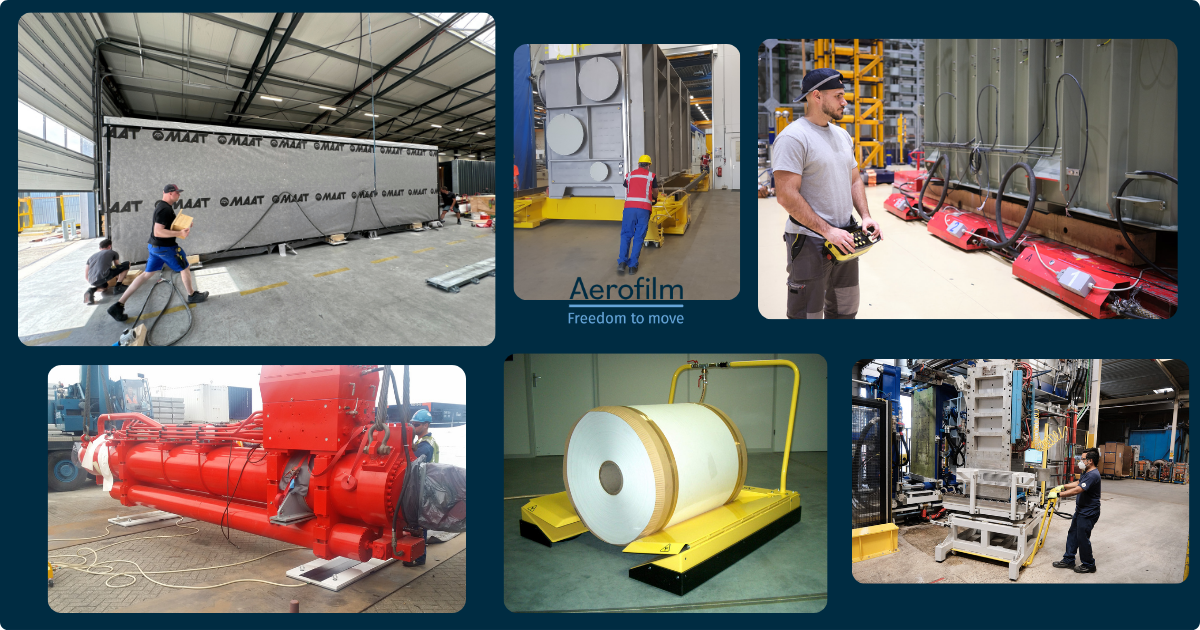
A transformer manufacturer faces different challenges than a modular builder. A brewery moves different loads than an aerospace supplier. And even within the same industry, differences in floor conditions, available space, load dimensions and production processes can completely change what is required from an internal transport system.
That is why there is rarely a one-size-fits-all solution for moving heavy loads.
Start with the environment, not the technology
When designing an Air Caster system, load capacity is only one part of the equation.
How will the load be moved? How much space is available? What is the condition of the floor? How often will the system be used? Does the load need to move along a predictable route, or does it need to be positioned freely?
At Aerofilm, these practical conditions form the starting point. Air casters and complete Air Caster systems can be configured around factors such as:
- Load weight and dimensions
- Floor conditions
- Available installation and manoeuvring space
- Required direction of movement
- Frequency and method of operation
- Integration with existing equipment and processes
The underlying Air Caster principle remains the same, but the way it is applied can differ significantly from one production environment to another.
One technology, very different applications
This adaptability is one of the reasons Air Caster technology can be found across such different industries.
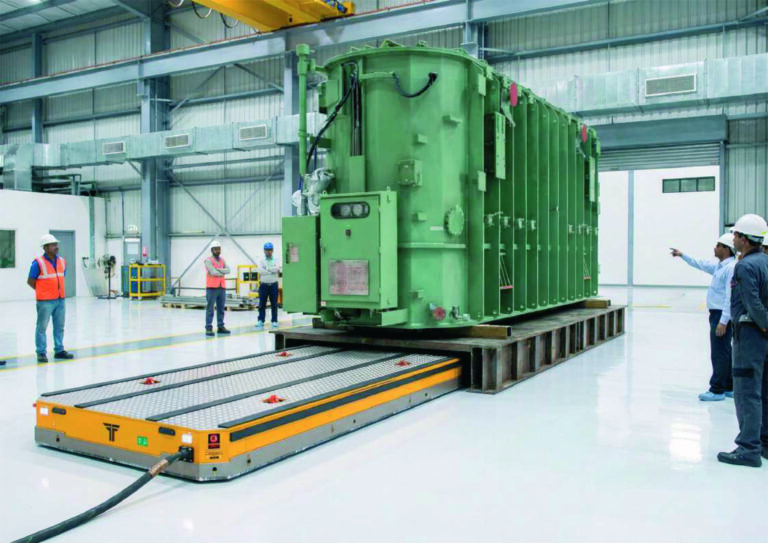
A transformer manufacturer may need to move extremely heavy equipment through a production facility. A modular builder might require flexibility when positioning large structures. In aerospace, the emphasis could be on controlled movement of highly sensitive components.
The application changes, but the basic challenge is similar: moving and positioning heavy loads safely and efficiently within the limitations of the existing environment.
Instead of forcing the production process to fit a standard transport system, the transport solution can be adapted to the process.
Production environments do not stand still
A system that works perfectly today also needs to make sense when production changes.
Demand shifts. Product dimensions change. Machines are relocated. Production lines are reorganized. New processes are introduced.
Fixed transport infrastructure can make those changes more complicated. Rails, for example, provide a defined transport route, but that route also determines where a load can go.
Air casters are not physically tied to such a fixed path. Once a load is supported on the air film, it can move smoothly in multiple directions with minimal force. This provides more freedom when loads need to be repositioned or when layouts change.
Flexibility as part of the design
Flexibility does not mean that every system needs to do everything.
It means looking beyond the immediate movement and considering how the system will be used throughout its working life.
For some applications, that might mean a relatively straightforward set of Air Casters. For others, it could require a complete Load Module System or a customized solution integrated into existing equipment.
The important part is that the solution is designed around the actual operation rather than around a standard configuration.
One principle, customized to the application
The principle behind Air Caster technology does not change, but the way it is applied does.
By adapting the Air Casters, configuration and controls to the environment specific conditions, the same technology can solve very different internal transport challenges.
That is where customization makes the difference. Not by creating a completely different technology for every industry, but by configuring a proven principle around the actual load, environment and process.